
 KACD
KACD
Search
- Page Path
- HOME > Search
Research Article
- Biological mechanisms underlying the inflammatory radicular cyst formation-focus on epithelial proliferation: a systematic review of experimental cell and tissue models
- Néstor Ríos-Osorio, Sandra Briñez-Rodríguez, David Betancur-Calle, Marggie Grajales, Óscar Mauricio Jiménez-Peña, Mario Guerrero-Torres, Rafael Fernández-Grisales
- Restor Dent Endod 2026;51(1):e7. Published online February 12, 2026
- DOI: https://doi.org/10.5395/rde.2026.51.e7
-
 Abstract
 PDF
PDF - Objectives
This study aimed to assess the molecular and cellular mechanisms involved in the epithelial proliferation that leads to the transformation of periapical granulomas (PGs) into inflammatory radicular cysts (IRCs).
Methods
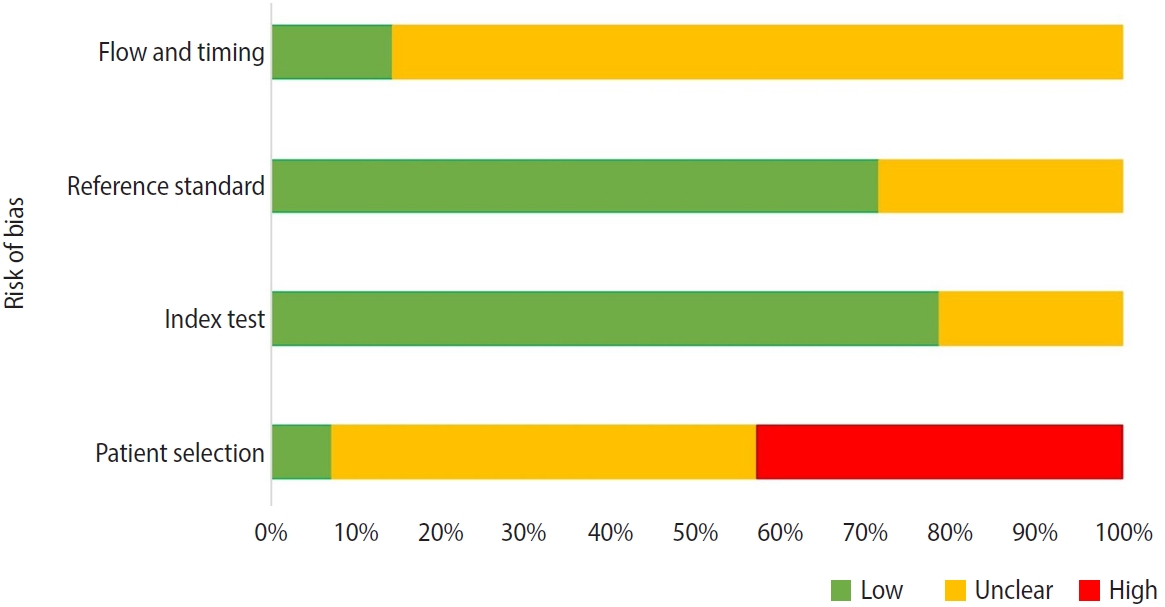
A comprehensive search was conducted in three databases. Experimental, observational, or descriptive studies using human or animal tissue samples, or epithelial cell cultures that assessed the molecular and/or cellular mechanisms driving the proliferation of epithelial rests of Malassez and their role in the transformation of PGs into IRCs were included. The risk of bias and applicability of the included studies were assessed using the QUADAS-2.
Results
Fourteen studies (including 399 samples) met the inclusion criteria for qualitative synthesis. The studies highlight the role of pro-inflammatory cytokines (IL-1β, IL-6), growth factors (EGF, KGF, TGF-β, and IGF), and signaling pathways (NF-κB, MAPK/ERK, PI3K/AKT, and Smad) in the progression of PG to IRC. Biomarkers of epithelial proliferation, such as Ki-67, PCNA, and CD34, are consistently associated with this process, while MMP-13 emerges as a key regulator of epithelial behavior and matrix remodeling.
Conclusions
IRC development arises from a transition from homeostatic to pathological signaling, in which pro-inflammatory mediator levels inside the periapical chronic inflammation override regulatory checkpoints.
- 5,930 View
- 111 Download

 First
First Prev
Prev


