
 KACD
KACD
Articles
- Page Path
- HOME > Restor Dent Endod > Volume 50(4); 2025 > Article
- Research Article Phase transformation temperatures influence the reduction ratio of fatigue resistance of nickel-titanium reciprocating files at body temperature: an in vitro experimental study
-
Walid Nehme1
 , Alfred Naaman2, Lola Pedèches3, Sylvie Lê3,4, Marie Georgelin-Gurgel3,4, Sang Won Kwak5, Hyeon-Cheol Kim5,6,*, Franck Diemer3,4,*
 -
Restor Dent Endod 2025;50(4):e35.
DOI: https://doi.org/10.5395/rde.2025.50.e35
Published online: November 5, 2025
1Department of Endodontics, Arthur Dugoni School of Dentistry, University of the Pacific, San Francisco, CA, USA
2Department of Endodontics, Faculty of Dental Medicine, Saint Joseph University, Beirut, Lebanon
3UFR d’Odontologie et Centre Hospitalier Universitaire de Toulouse, Toulouse, France
4INCOMM, Metabolic and Cardiovascular Research Institute, UMR 1297 INSERM, Toulouse, France
5Department of Conservative Dentistry, Dental and Life Science Institute, School of Dentistry, Pusan National University, Yangsan, Korea
6Dental Research Institute, Pusan National University Dental Hospital, Yangsan, Korea
- *Correspondence to Hyeon-Cheol Kim, DDS, MS, PhD Department of Conservative Dentistry, School of Dentistry, Pusan National University, 20 Geumo-ro, Mulgeum-eup, Yangsan 50612, Korea Email: golddent@pusan.ac.kr
- *Correspondence to Franck Diemer, DDS, MSc, PhD Department of Conservative Dentistry and Endodontics, CHU de Toulouse, Clement Ader Institute, 31400 Toulouse, France Email: franck.diemer@univ-tlse3.fr
• Received: April 30, 2025 • Revised: June 3, 2025 • Accepted: June 4, 2025
© 2025 The Korean Academy of Conservative Dentistry
This is an Open-Access article distributed under the terms of the Creative Commons Attribution Non-Commercial License (http://creativecommons.org/licenses/by-nc/4.0) which permits unrestricted non-commercial use, distribution, and reproduction in any medium, provided the original work is properly cited.


Abstract
-
Objectives The objective of this study was to evaluate the effects of transformational temperatures on the cyclic fatigue resistance at body temperature of reciprocating file systems: R motion (RM), Procodile Q (PQ), and Reciproc Blue.
-
Methods Resistance test was done in a custom-made device at room (20°C ± 1°C) and body (37°C ± 1°C) temperatures within a 60° angle of curvature and 5 mm radius of the artificial canal. The time to fracture (TTF) was recorded. The scanning electron microscope observation and differential scanning calorimetry analyses were performed. Two-way analysis of variance and Tukey post-hoc comparison were applied at a significance level of 0.05.
-
Results The results showed a significant influence of temperature on instrumental breakage, regardless of the file systems (p < 0.05). The TTF is significantly decreased at body temperature (p < 0.05). PQ showed the longest TTF in both temperature conditions (p < 0.05). RM demonstrated a significantly higher TTF reduction ratio compared to the other files (p < 0.05).
-
Conclusions Within the limitations of this study, the heat-treated files with reciprocating kinetics may have different reduction ratios of the fatigue resistance of the file systems under different temperature conditions. This characteristic is an important point of consideration when clinicians select the file system to reduce potential file fracture.
INTRODUCTION
Clinical endodontic procedures have undergone tremendous changes after the introduction of the nickel-titanium (NiTi) instrument. These instruments have undoubtfully eliminated procedural errors related to stainless-steel files, improving the mechanical preparation of the root canal system and promoting the speed and efficiency of mechanical instrumentation due to their flexibility and cutting efficiency [1,2]. Nonetheless, unpredictable file failure remains one of the most important drawbacks of NiTi files [3]. Over the past three decades, various changes have been implemented to reduce instrument separation, focusing on factors such as cross-sectional design, pitch length, groove depth, tip and taper dimensions, kinematics, and heat treatment of the alloy [4–6].
Despite the advancements in instruments, separation may occur through cyclic or torsional fatigue [3–5,7]. The cyclic fatigue failure takes place when the metal tolerance is exceeded, due to repeated compression and tension of the free-rotating instrument in a curved root canal [8]. Cyclic fatigue is the main reason for fracture of rotary files clinically [3,9]. The manufacturing process has an impact on the cyclic fatigue resistance. Grinding the instruments may leave some flaws near the surface of the wire, such as machining grooves or defects [10]. These irregularities and micro-voids related to the manufacturing of the NiTi create points for stress concentration and crack initiation, leading to instrument fractures as a result of a crack propagation process [11,12].
The stress generated on a file is influenced by various factors, including root canal anatomy and the operator’s technique [13]. Moreover, the instrument’s geometry, alloy composition, manufacturing process, and kinematics can significantly affect stress behavior [14]. The new generation of instruments undergoes some proprietary heat treatment aimed at optimizing the crystallographic phase of the file and increasing transformational temperatures, bringing them closer to body temperature [15,16].
Differential scanning calorimetry (DSC) is the most appropriate test to determine the transitional temperatures, such as austenite starting (As), austenite peak (Ap), austenite finishing (Af), martensite starting (Ms), martensite finishing (Mf), and to provide an idea regarding the crystallographic phase of endodontic files at a well-defined temperature [17]. A NiTi alloy with a higher As transformation temperature has more martensite, resulting in enhanced flexibility and increased cyclic fatigue resistance, which is beneficial for root canal instrumentation [18]. Heat-treated files may undergo phase transformation from martensite to austenite below body temperature [19]. Working at body temperature and intermittently using heated sodium hypochlorite may alter the file’s microstructure, shifting it toward a predominantly austenitic state, which is more susceptible to crack propagation than a martensitic file [19].
A recently introduced reciprocating file system, Procodile Q (PQ; Komet Medical, Lemgo, Germany), utilizes a variably tapered core combined with controlled memory alloy. There is little data about the fatigue resistance of the PQ file at room and body temperatures, compared to different reciprocating files. Therefore, the objective of this study was to evaluate the transformational temperatures and cyclic fatigue resistance of PQ at both room and body temperatures, and compare it with Reciproc Blue (RB; VDW, Munich, Germany) and R motion (RM; FKG Dentaire, La Chaux de Fonds, Switzerland). The null hypothesis is that there would be no difference in cyclic fatigue resistance among the files at both room and body temperatures.
METHODS
The sample size was determined using XLstat (Microsoft, Redmond, WA, USA) based on a previous study [13]. A power calculation for analysis of variance (ANOVA) or analysis of covariance, for three groups (instruments) and one degree of freedom (temperature), with an effect size fixed at 1 (second), and 0.05 alpha type error and 0.95 power indicated that the number of observations should be 16 per group. Thus, 20 instruments were assigned to each group.
A total of 120 NiTi files were used in this study, with forty files assigned to each of the three experimental groups: RM, PQ, and RB groups. All files presented a #25 ISO tip, a length of 25 mm, and a regressive 0.08 taper for RB, while PQ and RM had a fixed 0.06 taper.
Before the experiments, the instruments were inspected with a stereomicroscope (Leica M205C; Leica Microsystems, Wetzlar, Germany) to identify any defects. None of the instruments was discarded during this pre-experimental evaluation.
The cyclic fatigue resistance test was conducted using a custom-made device designed to replicate temperature conditions corresponding to room (20°C ± 1°C) and body (37°C ± 1°C) temperatures. A distilled water bath was set up with a rectangular tank measuring 40 cm in length, 25 cm in width, and 15 cm in height, accompanied by a heating device (Polystat 16000; Bioblock Scientific, Illkirch, France). A thermometer was placed at the bottom of the tank to check the temperature during the study.
The cyclic fatigue test was carried out using a hollow stainless-steel tube, mimicking the shape of a canal with a 60° angle of curvature and a 5-mm radius of curvature. The center of the curvature was positioned 5 mm from the tip of the tested file. This tube was attached to the side of the tank. An EndoPilot endo motor and handpiece (Komet USA, Rock Hill, SC, USA) were connected to the side of the tank and connected to the test device. The Reflex Dynamic program (Komet USA) is a left-reciprocating motion with the ability to vary angular velocity when it detects too much stress. It was chosen to operate all the instruments attached to the handpiece until the file fractured. Each NiTi file (n = 20) from three groups, in both temperature conditions, was operated within the 16-mm length of the simulated canal. The time to fracture (TTF) was recorded using a stopwatch.
All fragments of each group were chosen for fractographic examination. The fractured instruments were shortened with cutting pliers (removal of the mandrel), rinsed with deionized water, cleaned in an ultrasonic bath with absolute alcohol, and then placed vertically with the fractured surface facing upward on a metal support. The specimens were fixed in place with carbon tape. The metal holder was inserted into the scanning electron microscope (JSM-6400; JEOL Ltd, Tokyo, Japan) and observed in secondary vacuum. The photomicrographs were taken between ×100 and ×300 magnifications and recorded in JPEG format.
DSC analyses were performed using a DSC-8500 (PerkinElmer, Shelton, CT, USA). Before each measurement, temperature and energy calibration were performed. The samples underwent cooling to –70°C and then experienced a heating/cooling cycle within the temperature range of –70°C to 110°C, with a heating/cooling rate of 5°C/min. Three samples from each file system were used. These cycles were repeated three times for each instrument. The heating and cooling curves were recorded. Data processing was performed with Pyris software (PerkinElmer).
A descriptive analysis was carried and the data were compared with the temperature conditions and file groups. Statview version 5.0 (SAS Institute, Cary, NC, USA) was used for statistical analysis with an alpha risk of 5%. Data were tested for normality using the Shapiro-Wilk test. Under the conditions of normal distribution, two-way ANOVA and Tukey post-hoc comparison were applied to compare the file groups. In all experiments, a p-value of less than 0.05 was considered significant.
RESULTS
The results were collected in order to visualize and compare the different instrumental TTFs of the different instruments at room and body temperatures (Table 1) and the TTF ratio (%, body/room temperatures). The “Reflex Dynamic” program used on the EndoPilot motor never switched to its specific movement and kept its regular reciprocating movement.
The data normality was confirmed. The results showed a significant influence of temperature on instrumental breakage, regardless of the file systems (p < 0.05). The breakthrough time is significantly decreased at body temperature (p < 0.05), although the extent of reduction varies among the different instruments (Table 1). The PQ file showed the longest TTF in both temperature conditions (p < 0.05). The RM file demonstrated a significantly bigger substantial reduction in TTF (lower ratio) compared to the other files (p < 0.05).
The DSC plots, depicting both the heating and cooling cycles for different types of files, are presented in Figure 1. All tested instruments showed a homogeneous thermal transition with repeatable DSC scans. The mean values of the transformational temperatures for PQ are: Ms = 39.2, Mf = 24.4, As = 31.2, Af = 44.35; for RM: Ms = 28.2, Mf = 19.3, As = 29.6, Af = 38.6; and for RB: Ms = 43, Mf = 18.6, As = 25, Af = 48.2 (Figure 1). Both PQ and RB showed the Ap temperature at around 40°C and 37°C, respectively, while RM had the Ap at around 33°C (Figure 1).
The scanning electron microscopy images of the cross-sectional surface revealed typical features of fatigue fracture, such as crack initiation area (white arrow) and the fatigue zone positioned opposite to the crack initiation (Figure 2). No specific differences were observed in the test conditions of temperature. The cross-sectional shapes of the instruments varied for each file system, with an S shape for PQ and RB, and a triangular helix for RM. All the cross-sectional aspects show typical features of fatigue fracture, such as crack initiation area and fatigue zone, which is located at the opposite area to the crack initiation.
DISCUSSION
This study aimed to assess the influence of temperature on the fracture of NiTi endodontic instruments, both at room and body temperatures, and to correlate these findings with the transformational temperatures of the NiTi alloy. While previous studies have compared the influence of body temperature on the cyclic fatigue resistance of heat-treated rotary files, research on reciprocating files remains limited, particularly regarding the PQ file and the effect of different reciprocating motion kinetics [20,21]. This study focused on ISO #25 tip size files, chosen for their widespread clinical use.
Experimental results may vary depending on their origin from different production batches. Here, the instruments used come from the same production batch at all three factories, assuming the homogeneity of the selected samples.
In choosing between a static and a dynamic model, where vertical movement back and forth could potentially extend the time to failure, we opted for a static model because a static model concentrates fatigue in a specific instrumental area [22]. Thus, the static model would be better to reduce the deviation of the data, which might result from the dynamic movement, even if such a dynamic model would make it easier to extrapolate results to more clinical conditions.
To assess heat-treated instruments accurately, body temperature was applied in this study, considering their distinct phase transformation temperatures and fracture resistance at different temperatures. To simulate clinical conditions with body temperature, a water chamber was employed. While El Abed et al. [23] used heat-generating pads to transfer the temperature to the files, Cheung et al. [13] showed that aqueous media more closely simulate irrigating solutions and avoid temperature increases.
The transitional temperatures obtained for RM are similar to those reported by Basturk et al. [24], with 24.4°C and 32.5°C for As and Af, respectively. For PQ, our values were different from those reported by Generali et al. [25], as they were using the Procodile file, which is different from PQ. To our knowledge, there is no data on the TTF of PQ. Regarding RB, the values differ from those obtained by Plotino et al. [20] and Seracchini et al. [26]. The values of transformational temperatures may vary due to several factors, such as the method used, specimen preparation, different temperature ranges for heating/cooling, and the cooling rate.
The reciprocating movement of files does not allow calculation of real instrument rotation [27]. Thus, the TTF was used to measure fracture resistance rather than the rotation number of cycles to fracture because of the motion used. For RB, the TTF in our study was higher than that obtained by Keleş et al. [22] and Plotino et al. [28], but lower than the time reported by Klymus et al. [21] at room temperature. Regarding RM, the results were lower at room temperature compared to those obtained by Basturk et al. [24], who used a dynamic model. Dynamic models tend to extend cyclic fatigue life [22]. Our study used the “Reflex Dynamic” program (that is, a reciprocating movement able to change angles of reciprocation and angular speed when torque reaches the level set) with the EndoPilot motor, but this special movement did not occur due to the low torque applied by the stainless-steel tube. That was not the case in the study of Zubizarreta-Macho et al. [27], which used an artificial root canal and simulated a pecking movement. They found that Reflex smart reciprocation improved the cyclic fatigue resistance of reciprocating files compared to traditional reciprocating movement.
The TTF of PQ was the highest, followed by RB and RM at both room and body temperatures. According to Plotino et al. [28], the cross-sectional design influences the cyclic fatigue strength, with an inverse correlation between cyclic fatigue strength and the amount of metal mass in the cross-section of NiTi files. Therefore, the higher cyclic fatigue strength of PQ compared to RM could be attributed to its cross-sectional area associated with the S-shaped and the contact with a smaller number of dentin walls. The higher cyclic fatigue resistance of PQ compared to RB might be attributed to the effect of reduced metal mass resulting from the smaller taper. Furthermore, it is proposed that the heat treatment characteristics exert a more substantial influence on the fatigue cyclic resistance of the NiTi file than other factors such as cross-sectional area and taper [29]. It is conjectured that the elevated As and Af temperatures of PQ may have contributed to its superior cyclic fatigue resistance.
In the present study, all tested instruments had significantly faster separation at body temperature. This result is consistent with a previous report indicating that increasing temperature can negatively affect the cyclic fatigue resistance of heat-treated files [30].
The reduction in TTF at body temperature is associated with the crystallographic state of the alloy. The reduction ratio in our study was over 30% for PQ and RB, and over 70% for RM (Table 1). This could be explained by the fact that PQ and RB are in the martensite phase at room temperature and partially austenite at oral temperature. However, RM is the most impacted, as it is clearly used in both phases (fully martensite at room temperature and fully austenite at body temperature). At body temperature, its microstructure has completely switched to the austenite phase, and the file adopts a super-elastic behavior.
The DSC analysis provides a partial understanding of the impact of the operating temperature on each instrument. The As temperature values (24° for RB, 29° for RM, and 31.5° for PQ) are decisive in their behavior. PQ has the longest bending fatigue life under the conditions of this study. It is influenced by oral temperature by partially reverting to the austenite phase, which does not allow it to resist as long as at room temperature. The heat treatment effect diminishes to some extent during clinical use of these instruments. All instruments had a decreased breakage time (ranging from 23 to 64%, depending on the instrument).
This study tested the fatigue resistance under the 37°C to simulate body temperature. However, the phase transformation occurs inside of root canal, which is usually filled with an irrigation solution. Thus, future research may need to measure the actual root canal temperature and apply this condition for testing of martensite-dominant instruments.
CONCLUSIONS
Within the limitations of this study, the instruments used had variable fracture resistance depending on their geometrical profile, heat treatment, and the temperature at which they were used. The heat-treated files with reciprocating kinetics may have different reduction ratios of the fatigue resistance of the file systems under different temperature conditions. This characteristic is an important point of consideration when clinicians select the file system to reduce potential file fracture.
-
CONFLICT OF INTEREST
Hyeon-Cheol Kim is an Scientific Advisory Board member of Restorative Dentistry and Endodontics and was not involved in the peer-review or editorial process of this article. The authors declare no other conflicts of interest.
-
FUNDING/SUPPORT
The authors have no financial relationships relevant to this article to disclose.
-
AUTHOR CONTRIBUTIONS
Conceptualization, Formal analysis, Software, Supervision: Nehme W, Kim HC. Data curation: Naaman A, Pedèches L. Investigation: Naaman A, Pedèches L, Lê S. Methodology: Lê S, Georgelin-Gurgel M. Project administration, Resources: Diemer F. Validation: Kwak SW, Diemer F. Visualization: Kwak SW, Kim HC. Writing - original draft: Nehme W. Writing - review & editing: Kwak SW, Kim HC, Diemer F. All authors read and approved the final manuscript.
-
DATA SHARING STATEMENT
The datasets used and/or analyzed during the current study are available from the corresponding author on reasonable request.
Figure 1.
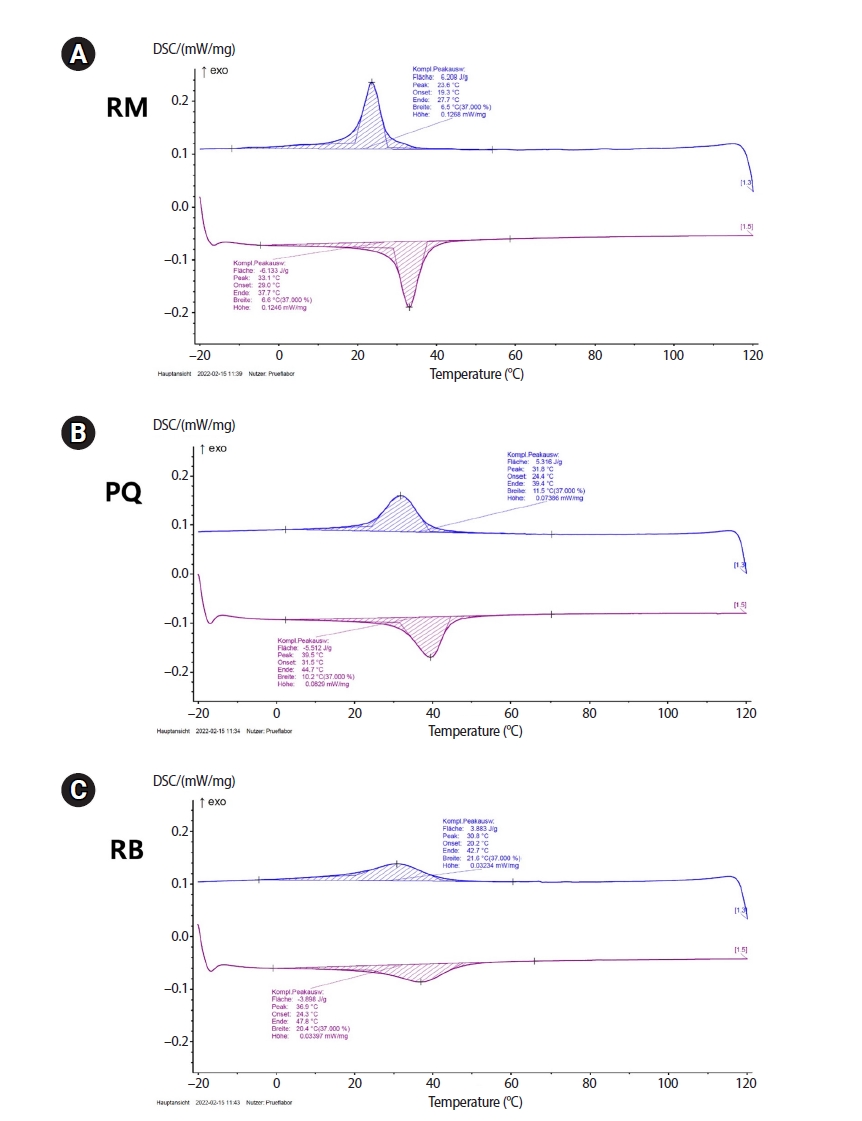
The representative plots of differential scanning calorimetry (DSC) for the three tested files. (A) R motion (RM; FKG Dentaire, La Chaux de Fonds, Switzerland), (B) Procodile Q (PQ; Komet Medical, Lemgo, Germany), and (C) Reciproc Blue (RB; VDW, Munich, Germany). Endothermic events are represented by peaks on the upper graph, indicating the absorption of heat by the sample during phase transitions, whereas exothermic events are depicted by peaks on the lower graph, signifying the release of heat by the sample during phase transitions. Note that PQ and RB showed the austenite peak (Ap) temperature at around 40°C and 37°C, respectively. In contrast, RM had the austenite finishing (Af) temperature at around 33°C, which is lower than body temperature.
Figure 2.
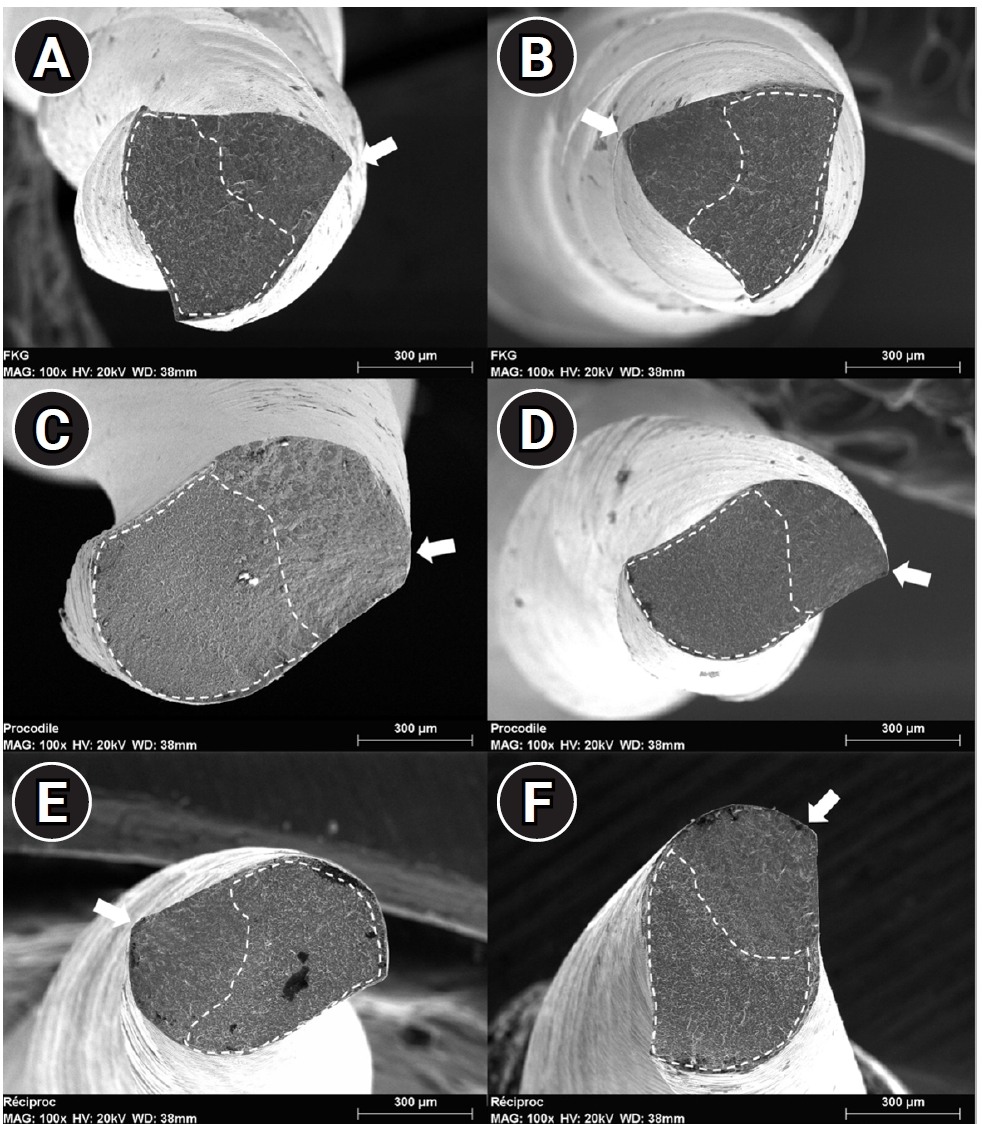
Scanning electron microscopy images captured at a magnification of ×100 depict the cross-sections of fractured fragments. (A, B) R Motion (FKG Dentaire, La Chaux de Fonds, Switzerland), (C, D) Procodile Q (Komet Medical, Lemgo, Germany), and (E, F) Reciproc Blue (VDW, Munich, Germany). The left column shows the specimens from the tests at room temperature, while the right column shows the specimens from the body temperature specimens. All the cross-sectional aspects show typical features of fatigue fracture such as crack initiation area (white arrows) and fatigue zone which is located at the opposite area to the crack initiation.
Table 1.
Time to fracture (TTF) at each temperature and TTF reduction ratio
| Temperature (°C) |
File |
||
|---|---|---|---|
| R Motion | Procodile Q | Reciproc Blue | |
| Room (20 ± 1) | 977 ± 149a | 993 ± 107a | 496 ± 72b |
| Body (37 ± 1) | 231 ± 23c | 629 ± 61a | 319 ± 43b |
| Reduction ratio (%) | 76.4* | 36.7 | 35.7 |
Values are presented as mean ± standard deviation unless otherwise specified.
R Motion: FKG Dentaire, La Chaux de Fonds, Switzerland; Procodile Q: Komet Medical, Lemgo, Germany; and Reciproc Blue: VDW, Munich, Germany.
There was significant interaction between files and temperatures (p < 0.05).
All file systems have longer TTF at room temperature than at body temperature (p < 0.05).
a,b,cDifferent superscript alphabets mean significant difference among file groups (p < 0.05).
*R Motion had a significantly higher TTF reduction ratio than other files (p < 0.05).
- 1. Pereira ÉS, Viana AC, Buono VT, Peters OA, Bahia MG. Behavior of nickel-titanium instruments manufactured with different thermal treatments. J Endod 2015;41:67-71.ArticlePubMed
- 2. Peters OA, Morgental RD, Schulze KA, Paqué F, Kopper PM, Vier-Pelisser FV. Determining cutting efficiency of nickel-titanium coronal flaring instruments used in lateral action. Int Endod J 2014;47:505-513.ArticlePubMed
- 3. Parashos P, Messer HH. Rotary NiTi instrument fracture and its consequences. J Endod 2006;32:1031-1043.ArticlePubMed
- 4. Kim HC, Kim HJ, Lee CJ, Kim BM, Park JK, Versluis A. Mechanical response of nickel-titanium instruments with different cross-sectional designs during shaping of simulated curved canals. Int Endod J 2009;42:593-602.ArticlePubMed
- 5. Shen Y, Hieawy A, Huang X, Wang ZJ, Maezono H, Haapasalo M. Fatigue resistance of a 3-dimensional conforming nickel-titanium rotary instrument in double curvatures. J Endod 2016;42:961-964.ArticlePubMed
- 6. Kishore A, Gurtu A, Bansal R, Singhal A, Mohan S, Mehrotra A. Comparison of canal transportation and centering ability of twisted files, HyFlex controlled memory, and wave one using computed tomography scan: an in vitro study. J Conserv Dent 2017;20:161-165.ArticlePubMedPMC
- 7. Pedulla E, Corsentino G, Ambu E, Rovai F, Campedelli F, Rapisarda S, et al. Influence of continuous or reciprocating optimum torque reverse motion on cyclic fatigue resistance of two single-file nickel-titanium rotary instruments. Eur Endod J 2017;2:1-6.Article
- 8. Pruett JP, Clement DJ, Carnes DL. Cyclic fatigue testing of nickel-titanium endodontic instruments. J Endod 1997;23:77-85.ArticlePubMed
- 9. Shen Y, Cheung GS, Bian Z, Peng B. Comparison of defects in ProFile and ProTaper systems after clinical use. J Endod 2006;32:61-65.ArticlePubMed
- 10. Shen Y, Haapasalo M, Cheung GS, Peng B. Defects in nickel-titanium instruments after clinical use: part 1: relationship between observed imperfections and factors leading to such defects in a cohort study. J Endod 2009;35:129-132.ArticlePubMed
- 11. Alapati SB, Brantley WA, Svec TA, Powers JM, Nusstein JM, Daehn GS. SEM observations of nickel-titanium rotary endodontic instruments that fractured during clinical Use. J Endod 2005;31:40-43.ArticlePubMed
- 12. Kuhn G, Tavernier B, Jordan L. Influence of structure on nickel-titanium endodontic instruments failure. J Endod 2001;27:516-520.ArticlePubMed
- 13. Cheung GS, Shen Y, Darvell BW. Effect of environment on low-cycle fatigue of a nickel-titanium instrument. J Endod 2007;33:1433-1437.ArticlePubMed
- 14. Nguyen HH, Fong H, Paranjpe A, Flake NM, Johnson JD, Peters OA. Evaluation of the resistance to cyclic fatigue among ProTaper next, ProTaper universal, and vortex blue rotary instruments. J Endod 2014;40:1190-1193.ArticlePubMed
- 15. Grande NM, Plotino G, Silla E, Pedullà E, DeDeus G, Gambarini G, et al. Environmental temperature drastically affects flexural fatigue resistance of nickel-titanium rotary files. J Endod 2017;43:1157-1160.ArticlePubMed
- 16. Hieawy A, Haapasalo M, Zhou H, Wang ZJ, Shen Y. Phase transformation behavior and resistance to bending and cyclic fatigue of ProTaper gold and ProTaper universal instruments. J Endod 2015;41:1134-1138.ArticlePubMed
- 17. Zanza A, Seracchiani M, Reda R, Miccoli G, Testarelli L, Di Nardo D. Metallurgical tests in endodontics: a narrative review. Bioengineering (Basel) 2022;9:30.ArticlePubMedPMC
- 18. Zupanc J, Vahdat-Pajouh N, Schäfer E. New thermomechanically treated NiTi alloys: a review. Int Endod J 2018;51:1088-1103.ArticlePubMedPDF
- 19. Shen Y, Zhou HM, Zheng YF, Peng B, Haapasalo M. Current challenges and concepts of the thermomechanical treatment of nickel-titanium instruments. J Endod 2013;39:163-172.ArticlePubMed
- 20. Plotino G, Grande NM, Testarelli L, Gambarini G, Castagnola R, Rossetti A, et al. Cyclic fatigue of reciproc and reciproc blue nickel-titanium reciprocating files at different environmental temperatures. J Endod 2018;44:1549-1552.ArticlePubMed
- 21. Klymus ME, Alcalde MP, Vivan RR, Só MV, de Vasconselos BC, Duarte MA. Effect of temperature on the cyclic fatigue resistance of thermally treated reciprocating instruments. Clin Oral Investig 2019;23:3047-3052.ArticlePubMedPDF
- 22. Keleş A, Eymirli A, Uyanık O, Nagas E. Influence of static and dynamic cyclic fatigue tests on the lifespan of four reciprocating systems at different temperatures. Int Endod J 2019;52:880-886.ArticlePubMedPDF
- 23. El Abed R, Alshehhi A, Kang YJ, Al Raeesi D, Khamis AH, Jamal M, et al. Fracture resistance of heat-treated nickel-titanium rotary files after usage and autoclave sterilization: an in vitro study. J Endod 2022;48:1428-1433.ArticlePubMed
- 24. Basturk FB, Özyürek T, Uslu G, Gündoğar M. Mechanical properties of the new generation RACE EVO and R-motion nickel-titanium instruments. Materials (Basel) 2022;15:3330.ArticlePubMedPMC
- 25. Generali L, Malovo A, Bolelli G, Borghi A, La Rosa GR, Puddu P, et al. Mechanical properties and metallurgical features of new green NiTi reciprocating instruments. Materials (Basel) 2020;13:3736.ArticlePubMedPMC
- 26. Seracchiani M, Reda R, Zanza A, D'Angelo M, Russo P, Luca T. Mechanical performance and metallurgical characteristics of 5 different single-file reciprocating instruments: a comparative in vitro and laboratory study. J Endod 2022;48:1073-1080.ArticlePubMed
- 27. Zubizarreta-Macho Á, Albaladejo Martínez A, Falcão Costa C, Quispe-López N, Agustín-Panadero R, Mena-Álvarez J. Influence of the type of reciprocating motion on the cyclic fatigue resistance of reciprocating files in a dynamic model. BMC Oral Health 2021;21:179.ArticlePubMedPMCPDF
- 28. Plotino G, Grande NM, Testarelli L, Gambarini G. Cyclic fatigue of Reciproc and WaveOne reciprocating instruments. Int Endod J 2012;45:614-618.ArticlePubMed
- 29. Kim E, Ha JH, Dorn SO, Shen Y, Kim HC, Kwak SW. Effect of heat treatment on mechanical properties of nickel-titanium instruments. J Endod 2024;50:213-219.ArticlePubMed
- 30. Shen Y, Huang X, Wang Z, Wei X, Haapasalo M. Low environmental temperature influences the fatigue resistance of nickel-titanium files. J Endod 2018;44:626-629.ArticlePubMed
REFERENCES
Tables & Figures
REFERENCES
Citations
Citations to this article as recorded by 
- Cryo-instrumentation technique: a temperature-modulated approach to improve the mechanical performance of NiTi endodontic instruments
Ajay Singh Rao, Ajinkya M. Pawar, M. Ashwin Surana, Riddhi Vasa, Shreya Volety, Unmesh Khanvilkar, Dian Agustin Wahjuningrum, Norhana Jusoh
Journal of Oral Biology and Craniofacial Research.2026; 16(5): 101519. CrossRef
 Cite
Cite XML Download
Phase transformation temperatures influence the reduction ratio of fatigue resistance of nickel-titanium reciprocating files at body temperature: an in vitro experimental study
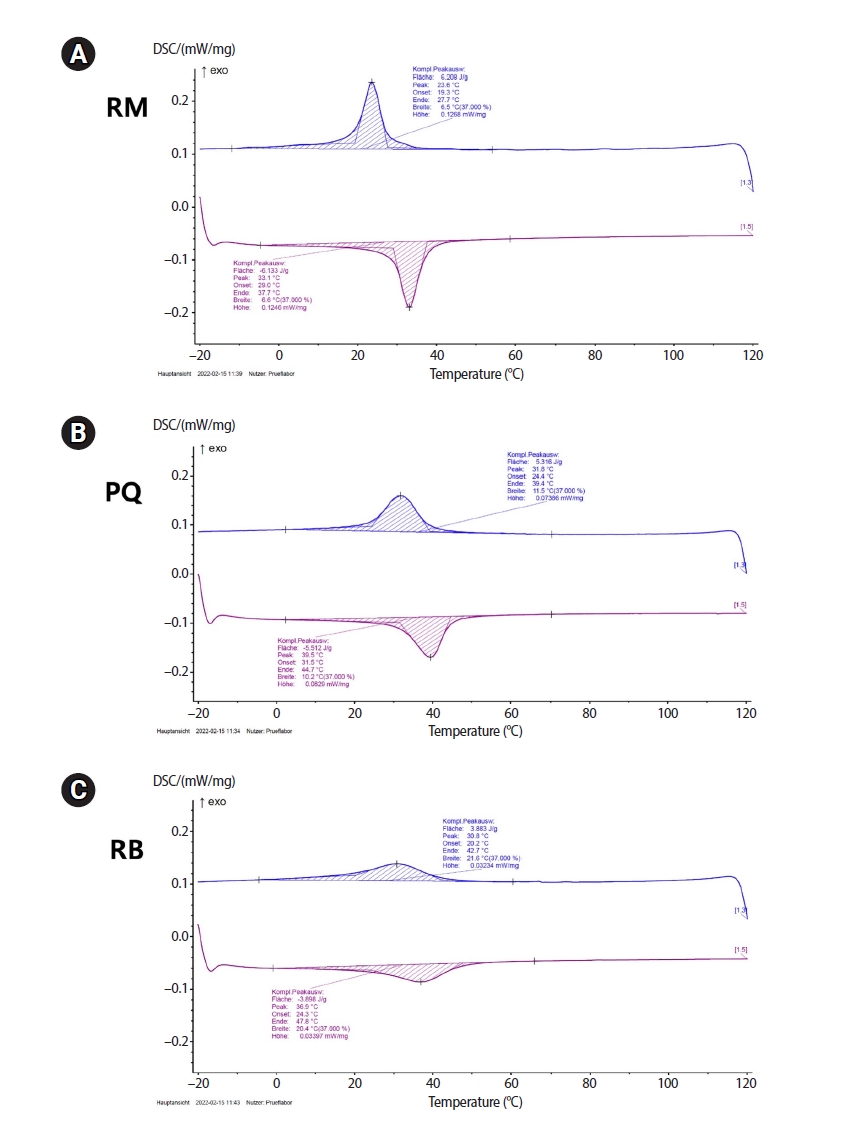
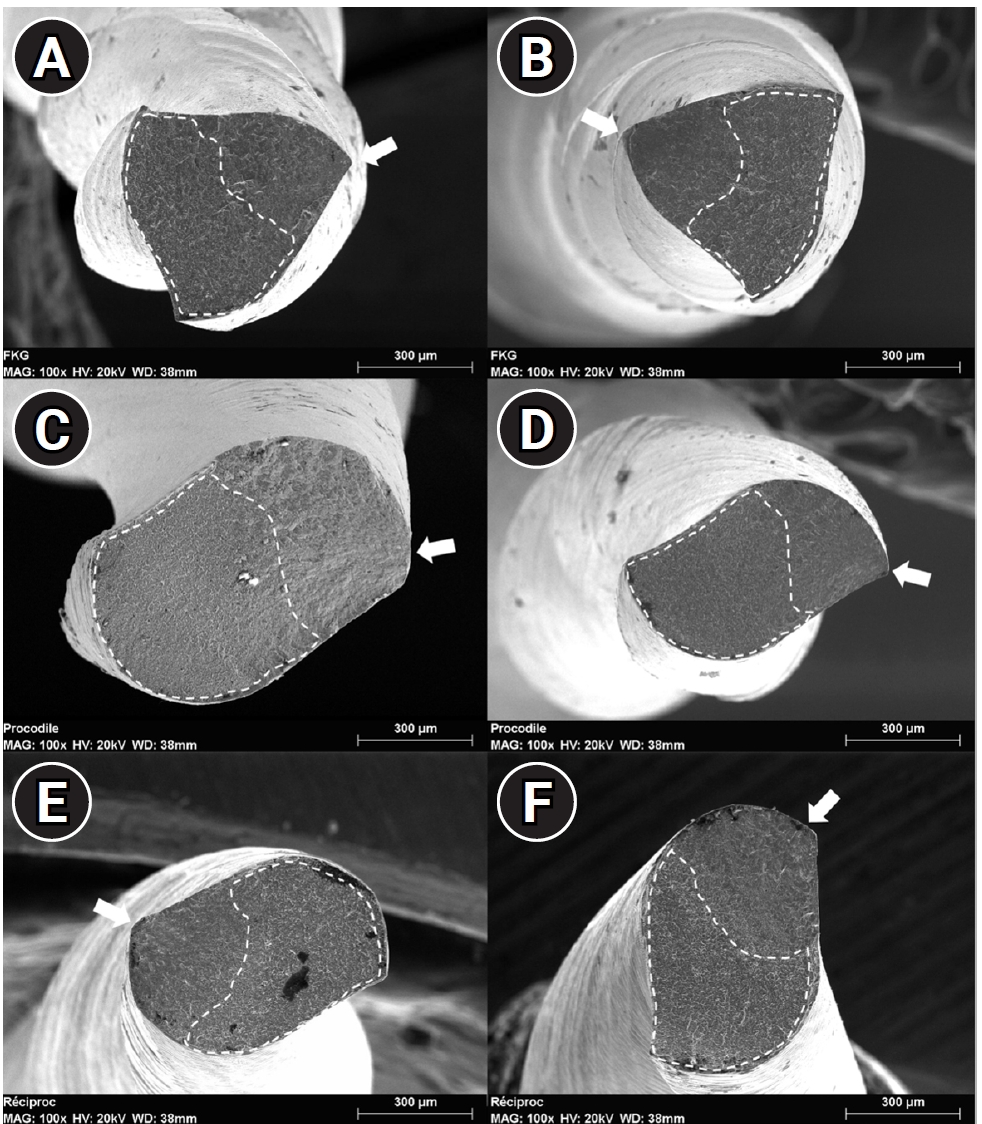
Figure 1. The representative plots of differential scanning calorimetry (DSC) for the three tested files. (A) R motion (RM; FKG Dentaire, La Chaux de Fonds, Switzerland), (B) Procodile Q (PQ; Komet Medical, Lemgo, Germany), and (C) Reciproc Blue (RB; VDW, Munich, Germany). Endothermic events are represented by peaks on the upper graph, indicating the absorption of heat by the sample during phase transitions, whereas exothermic events are depicted by peaks on the lower graph, signifying the release of heat by the sample during phase transitions. Note that PQ and RB showed the austenite peak (Ap) temperature at around 40°C and 37°C, respectively. In contrast, RM had the austenite finishing (Af) temperature at around 33°C, which is lower than body temperature.
Figure 2. Scanning electron microscopy images captured at a magnification of ×100 depict the cross-sections of fractured fragments. (A, B) R Motion (FKG Dentaire, La Chaux de Fonds, Switzerland), (C, D) Procodile Q (Komet Medical, Lemgo, Germany), and (E, F) Reciproc Blue (VDW, Munich, Germany). The left column shows the specimens from the tests at room temperature, while the right column shows the specimens from the body temperature specimens. All the cross-sectional aspects show typical features of fatigue fracture such as crack initiation area (white arrows) and fatigue zone which is located at the opposite area to the crack initiation.
Figure 1.
Figure 2.
Phase transformation temperatures influence the reduction ratio of fatigue resistance of nickel-titanium reciprocating files at body temperature: an in vitro experimental study
| Temperature (°C) | File |
||
|---|---|---|---|
| R Motion | Procodile Q | Reciproc Blue | |
| Room (20 ± 1) | 977 ± 149 |
993 ± 107 |
496 ± 72 |
| Body (37 ± 1) | 231 ± 23 |
629 ± 61 |
319 ± 43 |
| Reduction ratio (%) | 76.4 |
36.7 | 35.7 |
Table 1. Time to fracture (TTF) at each temperature and TTF reduction ratio
Values are presented as mean ± standard deviation unless otherwise specified. R Motion: FKG Dentaire, La Chaux de Fonds, Switzerland; Procodile Q: Komet Medical, Lemgo, Germany; and Reciproc Blue: VDW, Munich, Germany. There was significant interaction between files and temperatures ( All file systems have longer TTF at room temperature than at body temperature ( Different superscript alphabets mean significant difference among file groups ( R Motion had a significantly higher TTF reduction ratio than other files (


