
 KACD
KACD
Articles
- Page Path
- HOME > Restor Dent Endod > Volume 37(4); 2012 > Article
- Research Article A comparison of the shaping ability of reciprocating NiTi instruments in simulated curved canals
- Young-Sil Yoo, Yong-Bum Cho
-
2012;37(4):-227.
DOI: https://doi.org/10.5395/rde.2012.37.4.220
Published online: November 21, 2012
Department of Conservative Dentistry, Dankook University College of Dentistry, Cheonan, Korea.
- Correspondence to Yong-Bum Cho, DDS, PhD. Professor, Department of Conservative Dentistry, Dankook University, College of Dentistry, San 7-1, Shinbu-dong, Dongnam-gu, Cheonan, Korea 330-716. TEL, +82-41-550-1966; FAX, +82-41-553-1258; raindrop@dku.edu
• Received: October 26, 2012 • Revised: October 30, 2012 • Accepted: November 4, 2012
©Copyights 2012. The Korean Academy of Conservative Dentistry.
This is an Open Access article distributed under the terms of the Creative Commons Attribution Non-Commercial License (http://creativecommons.org/licenses/by-nc/3.0/) which permits unrestricted non-commercial use, distribution, and reproduction in any medium, provided the original work is properly cited.
- 3,340 Views
- 14 Download
- 30 Crossref


Abstract
-
Objectives The study was to compare the shaping ability of Reciproc (VDW) and WaveOne (Dentsply Maillefer) instruments compared with ProTaper, Profile and hand instrument during the preparation of simulated root canals.
-
Materials and Methods Five groups (n = 5) were established. Reciproc, WaveOne, ProTaper, Profile and K file (K-flexo file) were used to prepare the resin simulated canals. A series of preoperative and postoperative images were taken by a microscope and superimposed in 2 different layers. The amount of resin removed from both the inner and the outer sides of the canal was measured to the level of 10 mm from the apical tip, with a 1 mm increment.
-
Results The mean of resin removal from the inner canal wall was not different from the outer canal wall for Reciproc and WaveOne groups at apical third (1 - 3 mm level). There was no difference in the change of working length and maintenance of canal curvature. NiTi instruments are superior to stainless-steel K file in their shaping ability.
-
Conclusions Within the limitation of this present study, Reciproc and WaveOne instruments maintained the original canal curvature in curved canals better than ProTaper and Profile, which tend to transport towards the outer canal wall of the curve in the apical part of the canal.
Introduction
Effective cleaning and shaping the root canal system is the primary objective of root canal instrumentation. The root canal should be cleaned and shaped to allow three-dimensional obturation. The ideal prepared root canal should have a continuously tapering funnel shape that preserves the original anatomy with the smallest diameter at the end point and the largest at the orifice providing adequate canal shape to fill the canal.1,2
Shaping the canal is the most time-consuming and difficult factor of root canal therapy. Many techniques, devices, and instruments such as stainless steel hand instruments or nickel-titanium rotary instruments have been introduced to produce the appropriate root canal preparation.
The use of stainless steel hand files is time consuming and tiring, and it produces a high level of procedural errors.3 Since Walia et al. introduced nickel-titanium (NiTi) alloy called Nitinol,4 NiTi files in clinical practice has benefited the efficacy of endodontic practice by accuracy, speed, quality and risk reduction compared with the previously used manual stainless steel files because of their greater flexibility, better resistance to torsional fracture and the shape memory effect.5-8 The use of nickel-titanium instruments have reduced operator fatigue and enhances the success rate of root canal treatment in comparison with stainless steel hand instruments.9,10 As a result, there are several engine-driven systems available in dental market that use NiTi instruments of varying designs and dimensions now.
The use of balanced forces technique, the use of clockwise and anticlockwise movements in the preparation of root canals, was introduced in 1985.11 This technique allows maintenance of the original canal shape in curved root canal during preparation.12
The concept of reciprocating motion based on balanced force technique was introduced by Yared, who utilized the single F2 ProTaper instrument (Tulsa Dentsply, Tulsa, OK, USA) in reciprocating motion to shape root canals.13 This was shown to be as effective as the full ProTaper system in cleaning around root canals and extruding similar amounts of apical debris. Recently, two different reciprocating systems were introduced: Reciproc (VDW, Munich, Germany) and WaveOne (Dentsply Maillefer, Ballaigues, Switzerland). Both instruments have been designed for use in reciprocation (Figure 1).
These new systems suggest that the instrument designs can complete shaping the root canal with single file instrumentation. Thus, only one instrument is required to prepare a root canal. The Reciproc manufacturer suggests that only one of the three files is required to prepare a root canal: R25 (tip size 25 with a taper of 0.08 over the first apical millimeters), R40 (tip size 40 with a taper of 0.06 over the first apical millimeters), or R50 (tip size 50 with a taper of 0.05 over the first apical millimeters). According to WaveOne manufacturer, WaveOne single file is enough to fully shape the root canal. WaveOne NiTi files are available in three sizes: small (tip size 21 with a taper of 0.06), primary (tip size 25 with a taper of 0.08) and large (tip size 40 with a taper of 0.08).
Although successful therapy depends on many parameters, one of the most important factors in any root canal treatment is canal preparation. This is essential because preparation determines the efficacy of mechanical debridement and ideal canal geometries for adequate obturation.14 To date few investigations into the shaping ability of reciprocating files have been carried out. The purpose of the present study was to compare the shaping ability of new Reciproc and WaveOne instruments compared with ProTaper, Profile and hand instruments during the preparation of simulated root canals in resin blocks.
Materials and Methods
A total of 25 simulated root canals in transparent resin blocks (Dentsply Maillefer) were used in this study. All canals were 19 mm long, consisting of a 13 mm long straight coronal part, and a 6 mm long curved apical part. Each of these blocks had a 40-degree curvature according to Schneider method and each apical canal diameter was equivalent to an ISO size #15.15 To produce efficient irrigation, the apical foramen communicated with the outside of the resin block.
Prior to instrumentation, a series of photographs were taken using microscope (OPMI PRO Ergo, Carl Zeiss, Oberkochen, Germany) at 4.5 magnification. A video camera (HDR-PJ580, SONY, Tokyo, Japan) was firmly fixed to the microscope. Preoperative canals were filled with India ink (black) to accomplish a clear image of the canal. Landmarks were made with a pen in the four corners of the resin blocks.
A mold which was made for this study was placed on a stable support. This special mold made the accurate superimposition of the pre- and postoperative images possible. A preoperative digital image of the canal was taken and stored, and then resin block was removed to allow canal preparation. Once the simulated canal was prepared, each specimen containing the canals was placed in the mold and fixed into position. The image of the canals was taken and stored again.
Following the completion of instrumentation, a photograph of each canal was taken at the same magnification as that used prior to instrumentation. And the postoperative canals were colored with India ink (red) to improve the outlines. The preoperative and postoperative images were superimposed exactly in 2 different layers using Photoshop software (Adobe Systems, San Jose, CA, USA). The landmarks guaranteed a precise matching of pre- and post-instrumentation images.
Five groups (n = 5) were established. All canals were prepared by same operator experienced in preparation. The preparation followed the instructions of the manufacturer. The instrumentation was completed gently with an in-and-out motion and each canal was prepared until reaching the working length. On reaching the appropriate working length, the instrument was immediately withdrawn.
Group 1 (Reciproc)
Reciproc R25 was used with a pre-programmed setting of a Silver Reciproc reciprocating engine (VDW) with 'Reciproc all' mode. The instrument was pulled out of the canal after 3 pecks or when resistance is encountered. The instrument was used in a lateral brushing motion.
Group 2 (WaveOne)
WaveOne primary instrument having a size 25 was used with a pre-programmed setting of a Silver Reciproc reciprocating engine with 'WaveOne all' mode. It was the same movement as Reciproc.
Group 3 (ProTaper)
The preparation sequence of ProTaper instruments was as follows. S1 and S2 were used to 1 mm short of the working length. And then F1 and F2 instrument (apical size 25) were used to the working length.
Group 4 (Profile)
The preparation sequence of Profile instruments was as follows. #30 .06, #25 .06 and #30 .04 instruments were used to 3 mm short of the working length. And then #25 .04 and #25 .06 instruments were used to the working length. The instrumentation of ProTaper and Profile was accomplished with an X-Smart motor (Dentsply Maillefer).
Group 5 (K file)
The simulated root canals were prepared with step-back preparation technique 1 mm per file to a size 40, with a MAF of #25.
During the preparation procedure, each resin block was placed in an opaque mold and it concealed the specimen during the preparation so that the process was carried out with tactile sense only. It facilitates the handling of the resin block. But the operator knew the direction of the curve of each canal. The root canal was flushed with water by using a plastic syringe with a 27 gauze needle. Throughout the preparation a needle was inserted as deep as possible into the root canal without binding. The patency and recapitulation were performed between instruments changes with a #10 K file. Between instrumentation, the file flute was cleaned to remove resin debris.
To investigate the shaping ability of endodontic instruments, the amount of material removed at the different levels in the root canal, the change of working length and the maintenance of canal curvature were measured.
The amount of resin removed from both the inner (convex) and the outer (concave) sides of the canal in 1 mm steps were measured. 10 circles were described and the center of each circle was the apical point of the canal. A radius of the first circle was 1 mm from the apical point of the canal and the a radius of the last circle was 10 mm from the apical point, resulting in a total of 20 linear distance (10 points at the out and 10 points at the inner side) (Figure 2).16 The image calibration was performed by a digital image processing system (AutoCAD 2012; Autodesk Inc., San Rafael, CA, USA).
The degree of straightening was evaluated by measuring the angle between pre- and post-instrumentation images. The angle of canal straightening was determined according to Schneider.15
The final length of each canal was investigated following the preparation. The loss of working length was determined by subtracting the final length from the original length of each canal.
Mean and standard deviation were calculated for each group. One-way ANOVA and Tukey post hoc tests were used to compare the data using SPSS 17.0 (SPSS Inc., Chicago, IL, USA). Paired t-test was used to analyze difference between the mean material removed from the inner canal wall and from the outer canal wall at all measuring points for each system. The level of statistical significance was set at p < 0.05.
Results
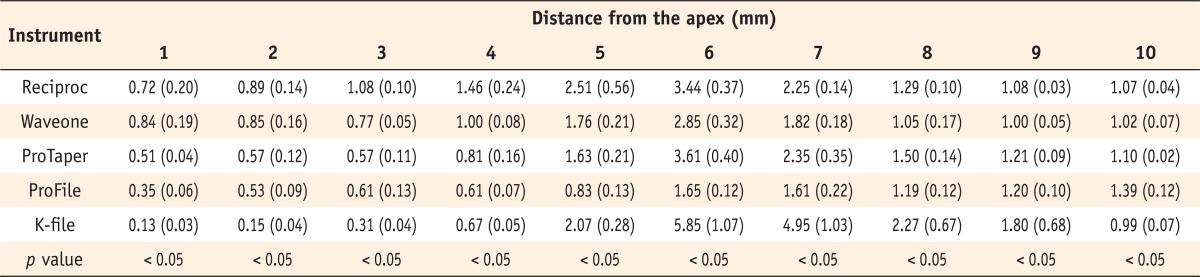
For evaluation, the pre-operative and post-operative images were superimposed (Figure 3). The mean amount of material removed at both the inner and outer canal walls is detailed in Table 1 and Figure 4. Statistical analysis using paired t-test revealed that in the mean resin removal, there were differences at all levels except the apical third (1 - 3 mm level) of the Reciproc and the WaveOne group; 2, 4 mm level of ProTaper; 5 mm level of Profile and 9, 10 mm level of the K file group.
The one-way ANOVA test showed that there was a significant difference between the mean ratios of material removal (inner/outer) (Table 2).
The mean degree of straightening of the curved canals is shown in Table 3. Canal straightening ranged between 3.74° and 0.71°. The use of Reciproc and WaveOne instruments resulted in less straightening during instrumentation compared to other instruments, although this difference was not statistically significant (p > 0.05).
All canals remained patent following instrumentation, thus none of the canals were blocked with debris. None of the canals had overextension after preparation, whereas a loss of working length was found. The mean loss of working length that occurred with different instruments is listed in Table 4. There was not any significant difference in the loss of working length among the groups (p > 0.05).
Discussion
Successful endodontic therapy is dependent upon the dentist's ability to clean and shape the root canal safely and effectively. This study attempted to compare the efficiency and shaping ability of the new single-file systems Reciproc and WaveOne with the established ProTaper and Profile instruments. Reciproc and WaveOne are commercially available instruments designed specifically to be used in reciprocating motion.
Generally, to evaluate the shaping abilities of different instruments, two experimental models have been used; simulated root canals in resin blocks and root canals in extracted human teeth. Although the use of real teeth provides conditions that are close to the clinical situation, it has large variations in the root canal morphology.17 Resin blocks are able to standardize the conditions in terms of diameter, length and angle of curvature of the original canal shape and allow direct comparison of the shaping ability of different instruments.16 However, the simulated canals in resin blocks do not represent the action of the instruments in the root canals of natural teeth. One of the drawbacks of using rotary instruments in resin block is heat generation, which may soften the resin material, leading to binding of cutting blades, and separation of the instrument.5.18 However, provided that the conditions are the same for either instruments or techniques tested, a comparison or the resultant shape of the canal using simulated canals in resin blocks may be a valid substitute for natural teeth.19
Measurements were determined at the certain distinct points. In previous studies, measurements were made at a total of nine positions; width at the end-point, width of the zip (when present) at its widest point, width of the elbow (when present) at its narrowest point, width at the apex of the curve of the original canal. width at the wide zone (when present) coronal to the elbow corresponding to the 'danger zone', width at the beginning of the curve, width at a narrowing of the canal (when present) coronal to the curve, width at a point half-way between the curve and the orifice, and width at the orifice and modification of the this method was used.20,21 In the present study, measuring points could be defined using the method described by Schäfer et al.16 By this method, we were able to maintain certain distance from the apical foramen and remove any subjective factors that might influence in deciding the measuring point.
When comparing the shaping abilities of different preparation systems of different root canal instruments, it is important to have similar apical preparation diameter.22,23 In this investigation, the final apical diameter in all groups was a size 25. For single-file systems, the Reciproc R25 file and the WaveOne primary reciprocating file were selected. These instruments had the same tip size of 25. This were performed in accordance with the recommendation of the manufacturers as these sizes are designated for narrow and curved canals when a hand instruments do not passively reach the full working length.
Whereas ProTaper, Profile and hand instruments have various apical sizes with gradual increase, Reciproc and WaveOne have omitted the conventional increments and offer apical widths of apical size 25 and 40. And the risk of transportation always increases in curved canals and with the increase of file size. Wider apical preparation might result in some canal straightening and undesirable weakening of the tooth structure, whereas minimal enlargement may leave tissue remnants and infected dentin behind.24 Thus, the Reciproc R25 file, the WaveOne primary reciprocating file, ProTaper F2, Profile #25 .06 and #25 K file were selected for this study.
The main parameters were used to evaluate the shaping ability while protecting the curvature of the canal and maintaining a good centering ability. Substantial curvature in the root canals lead to increased difficulty in root canal preparation.15,20 Several studies have determined the curvature of the root canals.15,25-27 To describe the severity of curved canals, Schneider initially put forward the concept of the angle of root canal curvature. The degree of canal curvature was defined as the angle between the long axis of the canal and a line from the point of initial curvature to the apical foramen.15 To describe the canal curvature, Schneider method which is the first and still most common method was used in this study. This method has limitation in that the radius of curvature is not considered as an important second parameter.25 But it is still a simple and generally accepted method for measuring root canal curvatures.
Statistical analysis using paired t-test revealed that in the mean resin removal, there were differences at all levels except the apical third (1 - 3 mm level) of Reciproc and WaveOne group; 2, 4 mm level of ProTaper; 5 mm level of Profile and 9, 10 mm level of K file group. This indicated that in the groups of Reciproc and WaveOne, the instrument had a tendency to maintain the centering in the apical 1 - 3 mm of the canal (Table 1).
These instruments should be used cautiously to avoid excessive removal at the inner curve, leading to danger zones and straightening of the canal. According to the results of the present study, in all groups the resin was removed more from the outer side of the curvature in the apical 1 - 3 mm except at the apical 3 mm level of Reciproc group, indicating a slight outer widening of the canal. ProTaper instruments removed more resin on the inner side of the curvature in comparison with the outer side of the curvature.21 This study found that stainless steel instrument led to more preparation at the middle level (curved region) than NiTi instruments. This result indicates that NiTi instruments decreased the risk of strip perforation in the curved canals. Stainless steel hand file has a high frequency of preparation errors probably as a result of the inherent stiffness of the metal. In most circumstances, the use of stainless steel files in narrow curved canals is difficult and limits apical enlargement thus hindering obturation.16,28
The inner/outer ratio is closed to 1 at apical 5, 6 mm level using Profile and apical 3 mm using Reciproc and WaveOne. This demonstrates that better compliance with original canal shape was obtained. A possible difference between the instruments can be the reciprocating movement. Previous studies have assessed ProTaper instruments when used in a reciprocating working motion regarding preparation of curved root canals.13,29,30 To overcome the root curvature, 'balanced forced technique' was proposed by Roane et al. in 1985.11 Reciprocal action is the specially designed to work in a similar manner but in a reverse balanced force motion. A large rotating angle in the counter clockwise motion determines the instrument advances in the canal and engages dentin to cut it, whereas a smaller angle in the clockwise motion allows the file to be immediately disengaged and safely progress along the canal path, while reducing the effect of a screwing effect and file breakage. These angles are specific for the different instruments. According to manufacturer, Reciproc is 150° counter clockwise then 30° clockwise rotation, while WaveOne is 170° counter clockwise then 50° clockwise rotation. These differences could have influenced the results of this study.
The straightening of curved root canals is one of major problems during root canal preparation. In order to reduce canal aberrations, new NiTi instruments have been developed. In 2007, a new NiTi M-Wire (Dentsply Tulsa Dental Specialties, Tulsa, OK, USA) technology was produced in an advanced thermal treatment process. The manufacturer states that M-wire is used to produce instruments with greater resistance to cyclic fatigue and greater flexibility than traditional NiTi alloy.31,32 Reciproc and WaveOne are manufactured with M-wire NiTi alloy. The mean straightening ranged between 2.94 when using ProTaper and 3.74 when using WaveOne. Although there is no statistical significance, Reciproc and WaveOne tend to be less straightened and K-file tends to be more straightened than other instruments. There was no statistical significance in the difference of working length loss within the groups. These findings are consistent with the observation of other investigators who observed the minimal decrease in working distance occurring with rotary NiTi instruments,5,17 but the authors of these studies doubted the clinical significance of the findings.
In present study, the shaping ability of different instruments including single file system was investigated by the amount of resin removed, straightening of the canal, and change of the working length. Because reciprocating movement uses pecking motion, the force applied to the apical portion can cause side-effects such as microcracks. Other important parameters are still needed to understand reciprocation and their influence on the shaping ability of these instruments.
Conclusions
Within the limitation of this present study, NiTi instruments are superior to stainless-steel K file in their shaping ability. Reciproc and WaveOne instruments maintained the original canal curvature in curved canals better than ProTaper and Profile, which tend to transport towards the outer canal wall of the curve in the apical part of the canal. Thus, both single-file systems showed relatively good shaping ability and can be suitable for shaping of curved canal with only one instrument.
- 1. Cohen S, Hargreaves KM. Pathways of the pulp. 2006. 9th ed. St. Louis: Mosby Inc; p. 305.
- 2. Schilder H. Cleaning and shaping the root canal. Dent Clin North Am 1974;18:269-296.ArticlePubMed
- 3. Garip Y, Gunday M. The use of computed tomography when comparing nickel-titanium and stainless steel files during preparation of simulated curved canals. Int Endod J 2001;34:452-457.ArticlePubMedPDF
- 4. Walia HM, Brantley WA, Gerstein H. An initial investigation of the bending and torsional properties of Nitinol root canal files. J Endod 1988;14:346-351.ArticlePubMed
- 5. Thompson SA, Dummer PM. Shaping ability of Profile .04 taper series 29 rotary nickel-titanium instruments in simulated root canals. Part1. Int Endod J 1997;30:1-7.ArticlePubMed
- 6. Wu MK, Wesselilnk PR. Efficacy of three techniques in cleaning the apical portion of curved root canals. Oral Surg Oral Med Oral Pathol Oral Radiol Endod 1995;79:492-496.ArticlePubMed
- 7. Zmener O, Banegas G. Comparison of three instrumentation technique in the preparation of simulated curved root canals. Int Endod J 1996;29:315-319.PubMed
- 8. Thompson SA. An overview of nickel-titanium alloys used in dentistry. Int Endod J 2000;33:297-310.ArticlePubMed
- 9. Cheung GS, Liu CS. A retrospective study of endodontic treatment outcome between nickel-titanium rotary and stainless steel hand filing techniques. J Endod 2009;35:938-943.ArticlePubMed
- 10. Kazemi RB, Stenman E, Spangberg LS. A comparison of stainless steel and nickel titanium H-type instruments of identical design: torsional and bending tests. Oral Surg Oral Med Oral Pathol Oral Radiol Endod 2000;90:500-506.ArticlePubMed
- 11. Roane JB, Sabala CL, Duncanson MG Jr. The "balanced force" concept for instrumentation of curved canals. J Endod 1985;11:203-211.ArticlePubMed
- 12. Southard DW, Oswald RJ, Natkin E. Instrumentation of curved molar root canals with the Roane technique. J Endod 1987;13:479-489.ArticlePubMed
- 13. Yared G. Canal preparation using only one Ni-Ti rotary instrument: preliminary observations. Int Endod J 2007;41:339-344.ArticlePubMed
- 14. Peters OA. Current challenges and concepts in the preparation of root canal systems: a review. J Endod 2004;30:559-567.ArticlePubMed
- 15. Schneider SW. A comparison of canal preparation in straight and curved root canals. Oral Surg Oral Med Oral Pathol 1971;32:271-275.PubMed
- 16. Schäfer E, Tepel J, Hoppe W. Properties of endodontic hand instruments used in rotary motion. Part2. Instrumentation of curved canals. J Endod 1995;21:493-497.ArticlePubMed
- 17. Schäfer E, Vlassis M. Comparative investigation of two rotary nickel-titanium instruments: ProTaper versus RaCe. Part 1. Shaping ability in simulated curved canals. Int Endod J 2004;37:229-238.ArticlePubMed
- 18. Kum KY, Spängberg L, Cha BY, Jung IY, Lee SJ, Lee CY. Shaping ability of three Profile rotary instrumentation techniques in simulated resin root canals. J Endod 2000;26:719-723.ArticlePubMed
- 19. Ahmad M. The Validity of using simulated root canals models for ultrasonic instrumentation. J Endod 1989;15:544-547.PubMed
- 20. Alodeh MH, Dummer PM. A comparison of the ability of K-files and Hedstrom files to shape simulated root canals in resin blocks. Int Endod J 1989;22:226-235.ArticlePubMed
- 21. Calberson FL, Deroose CA, Hommez GM, De Moor RJ. Shaping ability of ProTaper nickel-titanium files in simulated resin root canals. Int Endod J 2004;37:613-623.ArticlePubMed
- 22. Paqué F, Musch U, Hülsmann M. Comparison of root canal preparation using RaCe and ProTaper rotary Ni-Ti instruments. Int Endod J 2005;38:8-16.ArticlePubMed
- 23. Ku JH, Chang HS, Chang SW, Cho HH, Bae JM, Min KS. The instrument-centering ability of four Nickel-Titanium instruments in simulated curved root canals. J Korean Acad Conserv Dent 2006;31:113-118.Article
- 24. Schäfer E, Dammaschke T. Development and sequelae of canal transportation. Endod Top 2006;15:75-90.Article
- 25. Pruett JP, Clement DJ, Carnes DL Jr. Cyclic fatigue testing of nickel-titanium endodontic instruments. J Endod 1997;23:77-85.ArticlePubMed
- 26. Weine FS. Endodontic therapy. 1982. 3rd ed. St. Louis: Mosby Inc; p. 256-340.
- 27. Cunningham CJ, Senia ES. A three-dimensional study of canal curvatures in the mesial roots of mandibular molars. J Endod 1992;18:294-300.ArticlePubMed
- 28. ElDeeb ME, Boraas JC. The effect of different files on the preparation shape of severely curved canals. Int Endod J 1985;18:1-7.ArticlePubMed
- 29. You SY, Bae KS, Baek SH, Kum KY, Shon WJ, Lee W. Lifespan of one nickel-titanium rotary file with reciprocating motion in curved root canals. J Endod 2010;36:1991-1994.ArticlePubMed
- 30. You SY, Kim HC, Bae KS, Baek SH, Kum KY, Lee W. Shaping ability of reciprocating motion in curved root canals: a comparative study with micro-computed tomography. J Endod 2011;37:1296-1300.ArticlePubMed
- 31. Shen Y, Cheung GS, Bian Z, Peng B. Comparison of defects in ProFile and ProTaper systems after clinical use. J Endod 2006;32:61-65.ArticlePubMed
- 32. Johnson E, Lloyd A, Kuttler S, Namerow K. Comparison between a novel nickel-titanium alloy and 508 nitinol on the cyclic fatigue life of Profile 25/.04 rotary instruments. J Endod 2008;34:1406-1409.ArticlePubMed
REFERENCES
Figure 1

New reciprocating systems. (a) Reciproc file (R25, R40, R50) and Silver Reciproc reciprocating engine (VDW, Munich, Germany); (b) WaveOne file (small, primary, large) and WaveOne motor (Dentsply Maillefer, Ballaigues, Switzerland).
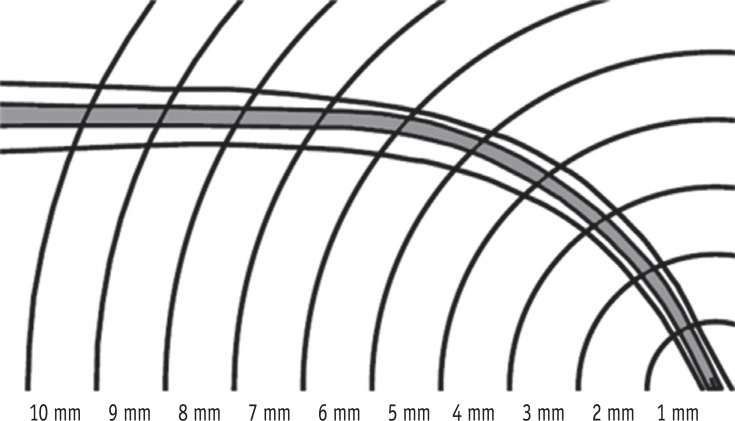
Figure 3
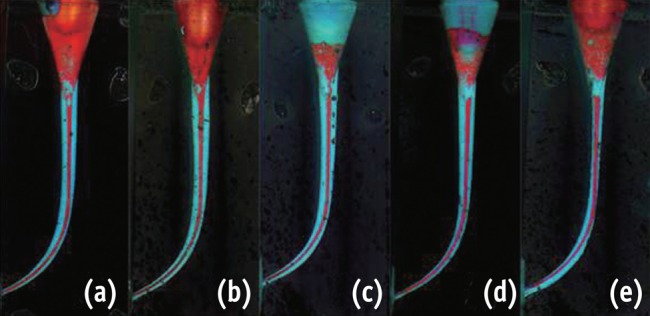
Superimposed image of each canal. (a) Reciproc; (b) WaveOne; (c) ProTaper; (d) Profile; (e) K-file.
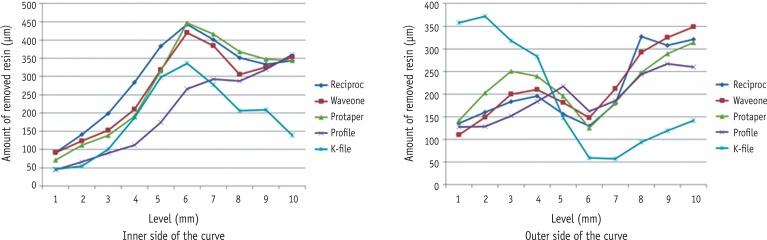
Table 1
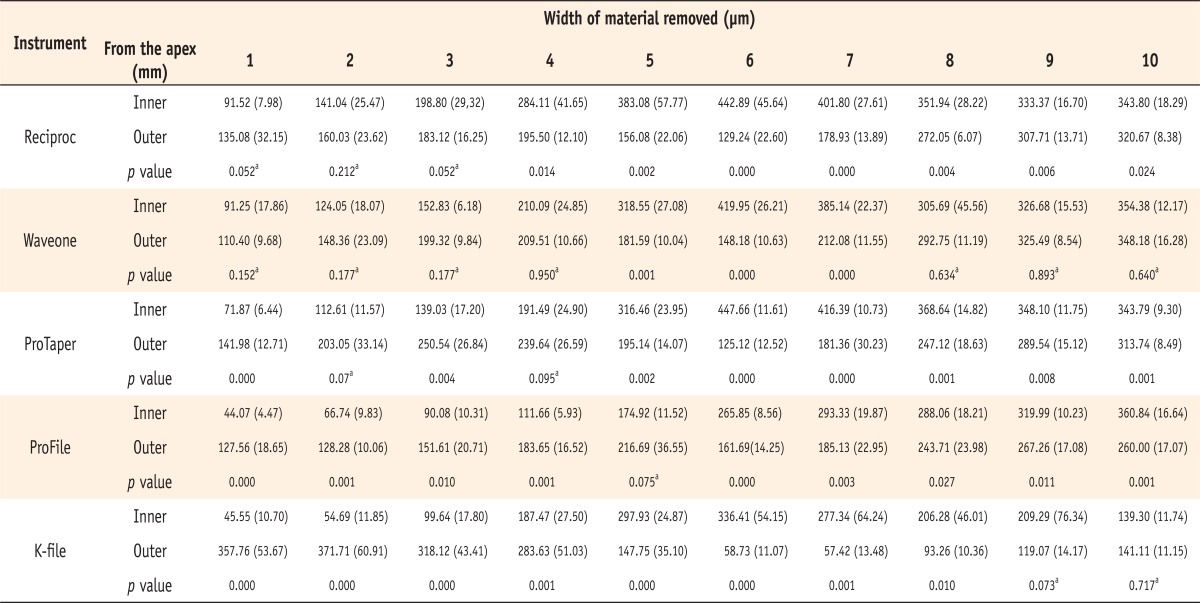
Width of material removed at different measuring points after instrumentation
The numbers in parentheses are standard deviations.
a, The values are statistically not different (Paired t-test, p > 0.05).


Tables & Figures
REFERENCES
Citations
Citations to this article as recorded by 
- Comparative Analysis of NiTi Instruments with Different Alloy Treatments
José Aranguren, Felipe Oliveros-Porras, Ana Ramírez-Muñoz, Irene Pérez, Marcela Salamanca-Ramos, Karim Aazzouzi-Raiss, Alejandro R. Pérez
Materials.2024; 17(19): 4817. CrossRef - Evaluation of the Centering Ability and Canal Transportation of Rotary File Systems in Different Kinematics Using CBCT
Nupur R Vasava, Shreya H Modi, Chintan Joshi, Mona C Somani, Sweety J Thumar, Aashray A Patel, Anisha D Parmar, Kruti M Jadawala
World Journal of Dentistry.2024; 14(11): 983. CrossRef - Apical Transportation of Apical Foramen by Different NiTi Alloy Systems: A Systematic Review
Francesco Puleio, Ugo Bellezza, Alessandra Torre, Francesco Giordano, Giuseppe Lo Giudice
Applied Sciences.2023; 13(19): 10555. CrossRef - Comparative evaluation of cleaning efficiency of single file NiTi rotary system during root canal treatment procedure - A scanning electron microscope study
Ruchi Vashisht, Umesh Kumar, Swaty Jhamb, Ruchi Singla
Journal of Conservative Dentistry.2023; 26(3): 316. CrossRef - Reciprocial movements of endodontic files - simpler and more certain therapeutic procedure
Slavoljub Zivkovic, Marijana Popovic-Bajic, Marija Zivkovic
Stomatoloski glasnik Srbije.2022; 69(1): 22. CrossRef - Canal transportation and centering ability of root canals prepared using rotary and reciprocating systems with and without PathFiles in cone-beam computed tomography-based three-dimensional molar prototypes
MSruthi Sunildath, Josey Mathew, Liza George, RV Vineet, Priya Thomas, Dhanya John
Journal of Conservative Dentistry.2021; 24(3): 246. CrossRef - Evaluation of Curved Canal Transportation Using the Neoniti Rotary System with Reciprocal Motion: A Comparative Study
Mohsen Aminsobhani, Arvin Rezaei Avval, Fatemeh Hamidzadeh, Luca Testarelli
International Journal of Dentistry.2021; 2021: 1. CrossRef - Cone-beam computed tomography assessment of root canal transportation and evaluation of remaining dentin thickness using XP EndoShaper and EndoStar E5
Nikita Arun Kamat, Saritha Vallabhaneni, Prahlad Saraf, Laxmikant Kamatagi, Shrishail Totad
Endodontology.2021; 33(1): 30. CrossRef - Shaping Ability of Reciprocating Single-file Systems in Simulated Canals: Reciproc versus Reciproc Blue
İrem ÇETİNKAYA, Mukadder İnci BAŞER KOLCU
SDÜ Tıp Fakültesi Dergisi.2021; 28(1): 145. CrossRef - Canal shaping with a reciprocating system is easy to learn
E. Muñoz, L. Forner, S. Garcet, F. J. Rodríguez‐Lozano, C. Llena
International Endodontic Journal.2019; 52(8): 1244. CrossRef - Transportation assessment in artificial curved canals after instrumentation with Reciproc, Reciproc Blue, and XP‐endo Shaper Systems
Juan Pacheco‐Yanes, Isbelia Gazzaneo, Alejandro R. Pérez, Luciana Armada, Mônica A. S. Neves
Journal of Investigative and Clinical Dentistry.2019;[Epub] CrossRef - Root canal volume change and transportation by Vortex Blue, ProTaper Next, and ProTaper Universal in curved root canals
Hyun-Jin Park, Min-Seock Seo, Young-Mi Moon
Restorative Dentistry & Endodontics.2018;[Epub] CrossRef - Shaping ability of protaper next compared with waveone in late-model three-dimensional printed teeth
Zhi Cui, Zhao Wei, Minquan Du, Ping Yan, Han Jiang
BMC Oral Health.2018;[Epub] CrossRef - A new methodology for the measurement of the root canal curvature and its 3D modification after instrumentation
Asterios Christodoulou, Georgios Mikrogeorgis, Triantafillia Vouzara, Konstantinos Papachristou, Christos Angelopoulos, Nikolaos Nikolaidis, Ioannis Pitas, Kleoniki Lyroudia
Acta Odontologica Scandinavica.2018; 76(7): 488. CrossRef - A comparison of the shaping ability of three nickel-titanium rotary instruments: a micro-computed tomography study via a contrast radiopaque technique in vitro
Zhao Wei, Zhi Cui, Ping Yan, Han Jiang
BMC Oral Health.2017;[Epub] CrossRef - Canal shaping of different single-file systems in curved root canals
Maurizio D'Amario, Francesco De Angelis, Maddalena Mancino, Massimo Frascaria, Mario Capogreco, Camillo D'Arcangelo
Journal of Dental Sciences.2017; 12(4): 328. CrossRef - The impact of clinical use on the torsional behavior of Reciproc and WaveOne instruments
Rafael Rodrigues Soares de MAGALHÃES, Lígia Carolina Moreira BRAGA, Érika Sales Joviano PEREIRA, Isabella Faria da Cunha PEIXOTO, Vicente Tadeu Lopes BUONO, Maria Guiomar de Azevedo BAHIA
Journal of Applied Oral Science.2016; 24(4): 310. CrossRef - Comparison of canal transportation in simulated curved canals prepared with ProTaper Universal and ProTaper Gold systems
Emmanuel João Nogueira Leal Silva, Brenda Leite Muniz, Frederico Pires, Felipe Gonçalves Belladonna, Aline Almeida Neves, Erick Miranda Souza, Gustavo De-Deus
Restorative Dentistry & Endodontics.2016; 41(1): 1. CrossRef - WaveOne Rotary Instruments after Clinical Use
Ya Shen, Jeffrey M. Coil, Anthony John Mo, Zhejun Wang, Ahmed Hieawy, Yan Yang, Markus Haapasalo
Journal of Endodontics.2016; 42(2): 186. CrossRef - Does the Reciproc file remove root canal bacteria and endotoxins as effectively as multifile rotary systems?
A. C. S. Marinho, F. C. Martinho, L. M. Gonçalves, H. R. C. Rabang, B. P. F. A. Gomes
International Endodontic Journal.2015; 48(6): 542. CrossRef - Shaping Ability of 4 Different Single-file Systems in Simulated S-shaped Canals
Abdulrahman Mohammed Saleh, Pouyan Vakili Gilani, Saeid Tavanafar, Edgar Schäfer
Journal of Endodontics.2015; 41(4): 548. CrossRef - Shaping Ability of Reciproc, UnicOne, and Protaper Universal in Simulated Root Canals
Etevaldo Matos Maia Filho, Cláudia de Castro Rizzi, Matheus Bandeca Coelho, Sara Freitas Santos, Luzia Mayanne Oliveira Costa, Ceci Nunes Carvalho, Rudys Rodolfo de Jesus Tavarez, Janir Alves Soares, Cornelis H. Pameijer
The Scientific World Journal.2015;[Epub] CrossRef - Current Assessment of Reciprocation in Endodontic Preparation: A Comprehensive Review—Part II: Properties and Effectiveness
Gianluca Plotino, Hany Mohamed Aly Ahmed, Nicola Maria Grande, Stephen Cohen, Frédéric Bukiet
Journal of Endodontics.2015; 41(12): 1939. CrossRef - Comparative evaluation of the shaping ability of WaveOne, Reciproc and OneShape single‐file systems in severely curved root canals of extracted teeth
S. E. D. M. Saber, M. M. Nagy, E. Schäfer
International Endodontic Journal.2015; 48(1): 109. CrossRef - Quantitative Transportation Assessment in Simulated Curved Canals Prepared with an Adaptive Movement System
Emmanuel João Nogueira Leal Silva, Michele Dias Nunes Tameirão, Felipe Gonçalves Belladonna, Aline Almeida Neves, Erick Miranda Souza, Gustavo De-Deus
Journal of Endodontics.2015; 41(7): 1125. CrossRef - Shaping ability of ProTaper Universal, WaveOne and ProTaper Next in simulated L-shaped and S-shaped root canals
Hui Wu, Cheng Peng, Yulong Bai, Xin Hu, Lei Wang, Changyi Li
BMC Oral Health.2015;[Epub] CrossRef - Shaping characteristics of two different motions nickel titanium file: a preliminary comparative study of surface profile and dentin chip
So-Ra Park, Se-Hee Park, Kyung-Mo Cho, Jin-Woo Kim
Journal of Dental Rehabilitation and Applied Science.2014; 30(2): 121. CrossRef - Effect of passive ultrasonic agitation during final irrigation on cleaning capacity of hybrid instrumentation
Marcilene Coelho Vinhorte, Eduardo Hideki Suzuki, Maíra Sousa de Carvalho, André Augusto Franco Marques, Emílio Carlos Sponchiado Júnior, Lucas da Fonseca Roberti Garcia
Restorative Dentistry & Endodontics.2014; 39(2): 104. CrossRef - Influence of operator's experience level on lifespan of the WaveOne Primary file in extracted teeth
Abdulrahman Mohammed Saleh, Saeid Tavanafar, Pouyan Vakili-Gilani, Noor Jamal Al Sammerraie, Faahim Rashid
Restorative Dentistry & Endodontics.2013; 38(4): 222. CrossRef - Endodontic treatment of mandibular molar with root dilaceration using Reciproc single-file system
Daniely Amorin Meireles, Mariana Mena Barreto Bastos, André Augusto Franco Marques, Lucas da Fonseca Roberti Garcia, Emílio Carlos Sponchiado
Restorative Dentistry & Endodontics.2013; 38(3): 167. CrossRef
 Cite
Cite XML Download
A comparison of the shaping ability of reciprocating NiTi instruments in simulated curved canals
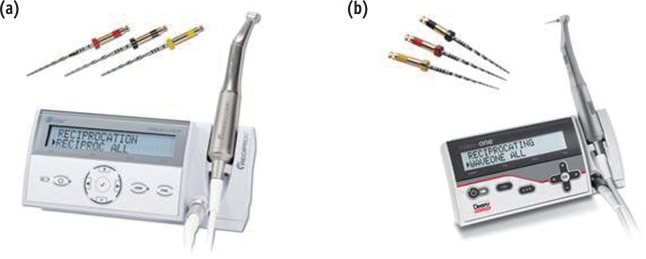
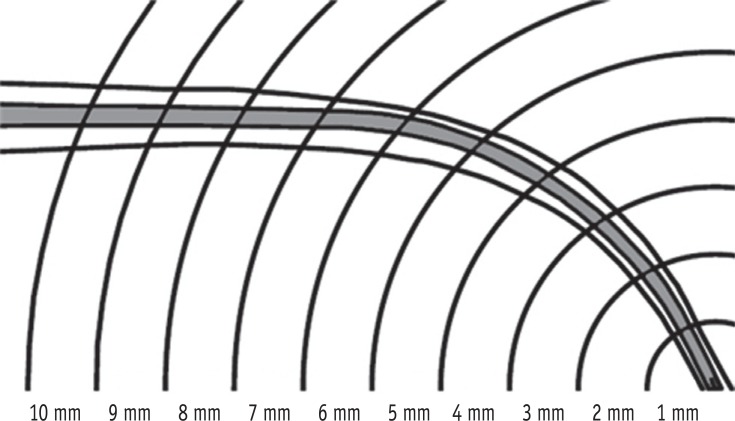
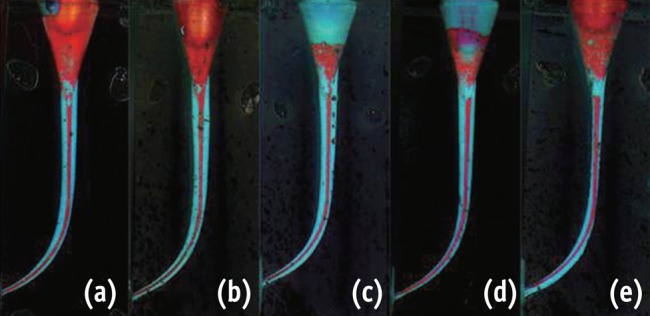
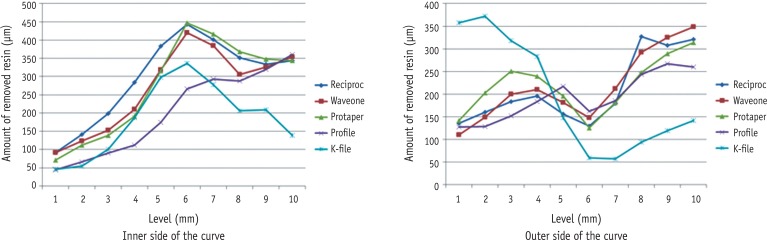
Figure 1 New reciprocating systems. (a) Reciproc file (R25, R40, R50) and Silver Reciproc reciprocating engine (VDW, Munich, Germany); (b) WaveOne file (small, primary, large) and WaveOne motor (Dentsply Maillefer, Ballaigues, Switzerland).
Figure 2 The positions of measurement are outlined by the ten concentric circles.
Figure 3 Superimposed image of each canal. (a) Reciproc; (b) WaveOne; (c) ProTaper; (d) Profile; (e) K-file.
Figure 4 Average thickness of canal wall removal by 5 instruments measured at various levels.
Figure 1
Figure 2
Figure 3
Figure 4
A comparison of the shaping ability of reciprocating NiTi instruments in simulated curved canals
Width of material removed at different measuring points after instrumentation
The numbers in parentheses are standard deviations.
a, The values are statistically not different (Paired t-test, p > 0.05).
Inner and outer material removal at different measuring points
The numbers in parentheses are standard deviations.
Degree of straightening of curved canals (°) after canal preparation
The numbers in the parentheses are standard deviations.
Loss of working length (mm) after canal preparation
The numbers in the parentheses are standard deviations.
Table 1 Width of material removed at different measuring points after instrumentation
The numbers in parentheses are standard deviations. a, The values are statistically not different (Paired
Table 2 Inner and outer material removal at different measuring points
The numbers in parentheses are standard deviations.
Table 3 Degree of straightening of curved canals (°) after canal preparation
The numbers in the parentheses are standard deviations.
Table 4 Loss of working length (mm) after canal preparation
The numbers in the parentheses are standard deviations.


